
Annual Parapet Inspection in NYC for Street-Facing Walls
Any NYC building with a parapet along a street or sidewalk must have that wall looked at closely once every year, no matter how tall the building is. A licensed partner engineer or architect examines the parapet from the roof, and our team opens the roof route, keeps each dated report in your six-year file and repairs whatever the findings call for.
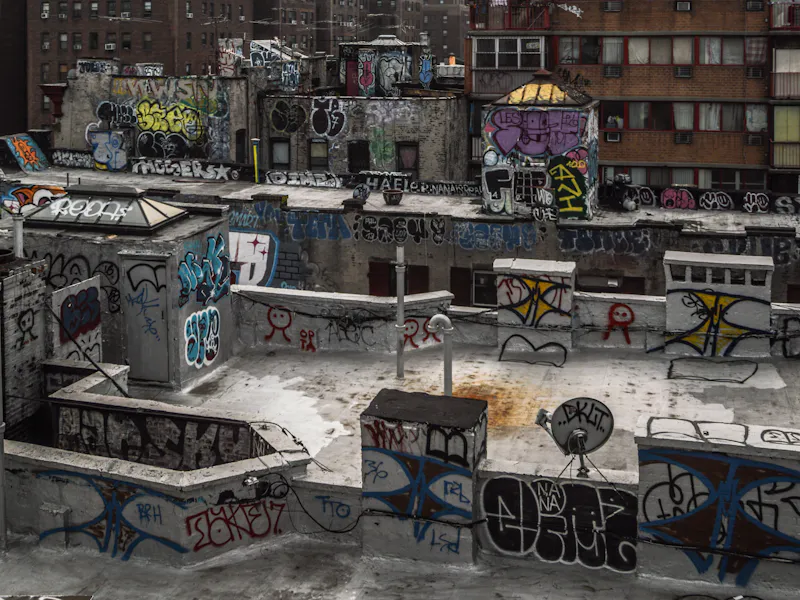
Which Buildings Need a Yearly Parapet Observation in NYC
Low-Rise Walk-Ups and Mixed-Use Buildings
Buildings of six stories or fewer sit outside FISP but still fall under this rule when a parapet fronts the street.
Taller Buildings Between Facade Exams
A building on the FISP cycle still owes the parapet a look every calendar year, not only when the facade report comes due.
Managers With Several Addresses
Property managers who want every parapet report dated, photographed and stored the same way.
How the Annual Parapet Inspection Rule Works in NYC
Since January 1, 2024, the rule known as 1 RCNY 103-15 has required a yearly observation of every parapet that borders a public right-of-way. The rule treats any part of a wall standing entirely above the roof as a parapet, and it reaches buildings of every height. The exemptions are narrow. Detached houses built for one or two families are left out, and so are buildings with a fence or barrier that stops anyone reaching the wall. The observer studies the whole parapet at close range, working along the roof or from a fire escape, confirms it is no more than one-eighth of its thickness out of plumb, looks for cracks, loose brick or coping, worn mortar, spalling or rot, and makes sure attached railings, signs and antennas are secure.
In a routine year nothing gets filed with DOB. Each report stays with the owner for a minimum of six years, ready to produce whenever DOB requests it. When the observer spots an unsafe condition, DOB has to hear about it right away through 311 and the parapets@buildings.nyc.gov inbox, public protection such as a shed, fencing or netting is installed immediately, and the repair has to be done inside 90 days of the DOB notice.
What You Get With Each Parapet Observation
One booking covers the visit, the paperwork and the follow-up.
- Booked Partner Visit. A licensed partner engineer or architect assigned to your address on a date that suits the building.
- Roof Route Arranged. Bulkhead, hatch or fire escape access confirmed so every street-facing parapet can be reached safely.
- Report Built to the Rule. All nine items the rule lists, from owner details to the location plan, gathered in one dated document.
- Dated Photo Record. Each condition photographed on the day the observer saw it.
- Unsafe Condition Response. DOB notified by the observer while our crew sets up a shed, fence or netting without waiting.
- Repair Pricing. A clear scope for repointing, coping resets or rebuilds whenever the report calls for them.
- Six-Year File Kept. This year's report stored alongside the earlier ones so it is ready if DOB asks to see it.
- Next Year's Reminder. A note well ahead of the next observation so no calendar year slips by.
The Parapet Observation Day in Four Steps
Date Set
We confirm the address, the roof route and a visit time that suits the building.
Wall Observed
The partner observer moves along every street-facing parapet, working from the roof edge or a fire escape.
Report Delivered
You receive the dated report with photos, a location plan and any repair notes.
Findings Handled
Our crews price and schedule repairs, or set up protection at once if something is unsafe.
What the Annual Parapet Inspection Checks on the Wall in NYC
The rule points the observer at six things on and around each parapet.
Lean and Plumb
The wall sighted along its full run and checked for tilt beyond one-eighth of its cross-section.
Cracks in the Masonry
Horizontal or diagonal cracks running through brick, block or stone.
Loose or Missing Units
Bricks or blocks that have shifted, dropped out or sit loose in their beds.
Coping Stones and Caps
Displaced, cracked or loose coping and open joints between the pieces.
Mortar, Spalling and Rot
Eroded joints, spalled faces and rotted wood blocking or trim.
Attached Items
Railings, roof access rails, gooseneck ladders, signs, antennas and fire escape handrail anchors.
Splitting the Work Between the Observer and Our Crew
Licensed Partner Observer
- Examines every street-facing parapet close up and records what it shows.
- Decides whether any condition is unsafe and reports it to DOB the same day.
- Signs the dated report with its findings and photos.
Our Team
- Books the visit and opens the roof route, hatch or fire escape.
- Puts up a shed, fence or netting as soon as a hazard is reported.
- Repoints, resets coping or rebuilds sections and logs the work for next year's report.
Five Things to Line Up Before Observation Day
A little preparation keeps the visit short and the report complete.
Clear Roof Route
Bulkhead or hatch keys and an open path to every parapet.
Last Year's Report
The previous observation, so the observer can compare conditions.
Repair Records
Invoices or permits for any parapet work done since the last report.
Owner Contact Details
The name, mailing address and phone the report must list, or a principal’s details for an LLC or board.
Rooftop Equipment List
Notes on antennas, signs or railings fixed to the wall and who owns each one.
Missed last year's parapet observation? Send the address through the contact page, and our team will book this year's visit.
Parapet Observation Costs and the Factors Behind Them in NYC
| Factor | How It Affects Cost |
|---|---|
|
Parapet Length |
Long street-facing runs and corner buildings take more time to observe and photograph. |
|
Roof Access |
An easy bulkhead walk costs less than a route through a hatch, ladder or fire escape. |
|
Number of Addresses |
Booking several buildings on one visit day lowers the cost for each address. |
|
Parapet Condition |
Walls with many cracks or loose units take longer to record in detail. |
|
Report Scope |
A plain annual report costs less than one that also adds a repair scope and budget. |
Common Questions About the Annual Parapet Inspection
The rule asks for one observation in each calendar year, so most owners book it well before December 31. Spring and early fall are popular, since roofs are dry and the weather is mild.
Yes. The rule lets any person competent to judge parapet hazards do it, including a super, mason or handyman. Many owners still choose a licensed engineer or architect, since that report carries more weight when a condition is borderline or DOB asks for the file.
No. It stays in the owner's records, kept six years or more, and goes to DOB only when the department requests it. Reaching out to DOB is needed only when the observer flags an unsafe condition.
The observer reports it to DOB at once through 311 and the parapets email, protection is set up without delay, and the owner then has 90 days from that notice to finish the repair.
Yes, as long as a parapet fronts a public way. Height makes no difference. The one building type exempt outright is a detached house for one or two families.
The rule covers parapets running along a public right-of-way, meaning a street, avenue or sidewalk. A wall above a private yard falls outside it, though it still has to be kept safe like the rest of the building.
Yes. Signs, railings, roof access rails, gooseneck ladders, telecom equipment and fire escape handrail attachments all need to be stable, and the observer looks at how each one is anchored.
No. The observer works along the roof or from a fire escape. A shed is needed only once an unsafe condition turns up, and the DOB NOW shed filing then asks whether it relates to the parapet observation.
Next, Learn How to Read Your FISP Report
Ratings, repair dates and photos explained in plain terms, so you know what each finding means for your building.